

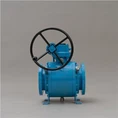
Strainer
Why Choose Us
Founded in the year 2004 by a Norwegian engineer with an extensive experience in the Italian valve industry, Valpro Valves is a leading valve manufacturer of API6D/ API600 / API 6A Gate, Ball, Globe, Check valve, Forged Steel Valve and Butterfly valves.
Reliable Production
Our manufacturing capacity has over 193, 000 square feet of workspace, 105 sets of machines that can easily assemble, overlay, and machine valves from ½"- 60" inch classes ranging from 150lb to 2500LB.
Wide Product Range
Our product include API6D/ API600 / API 6A Gate, Ball, Globe, Check valve, Forged Steel Valve and Butterfly valves, etc.
International Standards
We international standards ASTM, ANSI, DIN, BS, NACE, MSS and other standards
Quality Assurance
We have obtained certificates such as API 600, API 6D, API 6A, CE, ISO 9001, ISO 14001, ISO 45001, API 6FA/API 607, etc..


What is Strainer
A strainer valve is a pipe fitting with an attached metal, mesh, or wedge wire strainer that strains and filters liquid and separates it from solid matter. If you want to know the specifications and prices of Strainer, please contact us!
Advantages of Strainer
High Degrees of Filtering Flexibility
Often, manufacturers need to ensure that fine particles are removed from their products. A strainer can do this. You'll want to choose a strainer that best serves the viscosity of your products. You also want to work with a filter solution specifically designed to adjust to different capacities, from slow flow rates to high-volume production outputs.
Remove More Particles
An inline strainer will remove more particles or contaminants than a simplex filter, which is a more basic form of protection for pumps and valves. With a strainer solution, your plant can process more product — and gain better control of particulates.
Save Time During Processing
With a simplex strainer, your operations are routinely slowed. When a simplex strainer becomes clogged, your production needs to shut down to remove, clean and reinstall the filter. One major benefit of using strainers and a clog monitor is that a technician can easily see when a filter needs to be cleaned. They can also switch a valve setting to reroute the flow to the other filter, without shutting down the whole system. Your production lines are disrupted less and operate more efficiently when using a strainer, and a strainer diagram can help illustrate just how much more efficient it can be.
Uniform Processing
Straining is often used to remove contaminants, but it also has other useful applications. When you run liquids through strainers, you can break up thicker material into uniform particle sizes. Using a strainer for milk, oils and other products that begin as particles of different sizes, is an effective way to create uniformity in finished products.
Versatility
Strainer systems feature great flexibility for manufacturers producing different product lines. Whether coarse or fine particles are strained, strainers have the ability to work across multiple products quickly. For example, juice manufacturers can easily create different end products with different levels of pulp content.
Consistency
Customers and consumers expect products to perform, feel and taste the same each time, especially within the same brand. With strainers, you can ensure high-quality, uniform products in each production run.
Diverse Product Sets
Companies like SaniClean Strainers produce a range of available products suitable for straining needs. Choosing a company that offers inline strainers, side inlet strainers, basket strainers, over screens, wire elements, perforated backup tubes and filter socks ensures you'll have everything you will need fit all your production equipment.
Varied Applications
Duplex strainers serve many different types of industries, including food and beverage production, pharmaceuticals, biotech, chemical processing, contract packaging and flavor companies. Chances are, if you need to strain liquids, a duplex strainer is a smart choice for industry.
Types of Strainer


Automatic Strainers
Finally, automatic strainers have baskets that are self-cleaning. This type of strainer is permanent in application. The body of the strainer is typically made out of materials such as iron, steel, stainless steel, and other specified materials. The filter or basket of the strainer is made of stainless steel.
The main advantage of using an automatic strainer is their self-cleaning capabilities. Because of the automatic nature of the strainer, the cleaning process is never interrupted. Instead, self-cleaning is controlled in a number of different ways, most commonly timers, pressure drop settings, or manually. Contact us today to find out your options.
Duplex Strainers
Another basket type filter or strainer, duplex strainers are permanent in application. The body of duplex filters are most commonly comprised of iron, steel, or stainless steel, though duplex strainers made of other materials are available. The filter or basket of the strainer is made of stainless steel.
One of the biggest advantages of duplex strainers is their ease of maintenance. Not only do duplex strainers have an easy-open design, they are also able to be cleaned individually while one strainer stays on standby. In addition to an easier maintenance, duplex strainers have high particle holding capacity, which provides less pressure drop through the strainer. To get more specifications, peruse our selection of duplex strainers here.
Eaton's Duplex Industrial Basket Strainer is able to operate on a continuous basis, never requiring the line to stop for maintenance tasks to be performed. This is due to the two baskets being used, which operate independently of one another. Once one of the baskets becomes full, the flow is channeled to the other basket, allowing the full basket to be removed and cleaned out. The design of Duplex Industrial Basket Strainer makes it a great option for applications where lines cannot be shut down for maintenance to take place. Visit our site to learn more.
Y Strainers
Another commonly used strainer, Y (wye) strainers are named for their shape and are designed to be temporary in application, unless the liquid being filtered has a low concentration of contaminants. The body of this type of strainer is typically composed of iron, steel, or stainless steel, with other compositions being possible. The filter element, a sieve, is made of stainless steel.
The advantages of this type of strainer lie in the price, as Y strainers are commonly low cost. Maintenance for this type of strainer can be a little tricky, and particle retention capacity is low.
These strainers are most commonly used for pressurized lines or suction-type systems.
Simplex Strainers
Simplex strainers are one type of strainer commonly used in oil and gas processing. They are considered a type of basket strainer and are permanent in application. The body of this type of strainer can be made out of a number of different materials, most commonly iron, steel, and stainless steel. The basket or filter element of the strainer is made out of stainless steel with a number of different filtration grades available.
There are a number of different advantages to using this type of strainer. The easy-to-open design of the strainer provides for simple maintenance. Simplex strainers also have a large particle holding capacity with less pressure drop over the length of the filter element.
At Eaton, Simplex Industrial Basket Strainers are designed to be used where it is possible for the line to be shut down for short periods of time to allow for maintenance. Eaton's standard cast pipeline strainers meet a number of high standards. These include ISO 9001-2008 quality management, reduced purge volumes due to their ultra-low discharge strainer technology, and appropriately sized parts to meet any flow rate and retention requirement. To learn more, check out our website.
How to Choose Strainer
Understanding Your Application
Begin by thoroughly understanding the nature of your application. Consider factors such as the type of fluid (liquid or gas), its temperature, pressure, flow rate, and the type of contaminants you need to filter.
Identify Required Specifications
Determine the necessary specifications for your strainer, including size, material compatibility, pressure rating, and filtration capacity. This will narrow down your options.
Consider Material Compatibility
Choose a strainer material that is compatible with the fluid you'll be working with. Common materials include stainless steel, carbon steel, bronze, and PVC. Consider factors like corrosion resistance and temperature limits.
Evaluate Filtration Level
Determine the level of filtration needed based on the size and type of particles you want to remove. Different strainers have varying mesh sizes or perforation diameters to capture specific contaminants.
Select Strainer Type
There are various types of industrial strainers, including simplex, duplex, Y-strainers, and basket strainers. Each serves a specific purpose, so choose one that aligns with your application requirements.
Consider Flow Capacity
Determine the flow rate of your system. The strainer should be able to handle the maximum flow without causing a significant pressure drop.
Factor in Maintenance Needs
Consider the ease of maintenance. Some strainers have quick-open closures or self-cleaning mechanisms, while others may require more involved disassembly.
Account for Pressure Ratings
Ensure that the strainer's pressure rating exceeds the maximum operating pressure of your system to prevent any risk of failure.
Think About Installation Requirements
Consider how and where the strainer will be installed. This includes factors like orientation, inlet and outlet connections, and available space.
Check Manufacturer's Recommendations
Consult the manufacturer's guidelines and recommendations. They often provide specific information about the strainer's capabilities and limitations.
Cost Consideration
Balance your budget with the required specifications. Remember that investing in a quality strainer upfront can lead to long-term savings through improved performance and reduced maintenance costs.
Consult with Experts
If you're unsure about any aspect of strainer selection, seek advice from industry experts, engineers, or the strainer manufacturer. Call Sungov Engineering today and our experts will provide valuable insights and recommendations.
Review and Confirm Selection
Before finalizing your decision, review all the gathered information to ensure the chosen strainer aligns perfectly with your application's requirements.
How to Maintain Strainer
The Importance of Visual Inspections
By far, one of the most important steps that you can take to help keep your strainers clean and sanitary involves inspecting them not only visually, but on a regular basis. You need to know what your strainers look like when they're in proper working order so that you can quickly identify those situations when a deep clean may be necessary.
Be on the lookout for not only issues like dents but also loose, wavy or torn mesh and other signs of damage. Always check for issues like scratches and cracks as well BEFORE you use your strainers for a particular application.
Make Sure You Have the Right Tools
Because of the unique way that strainers are designed, there may be times when certain types of dust, dirt or other debris are difficult to remove on your own. When you find yourself in that type of situation, always make sure you have the right, pointy tools by your side.
For the vast majority of these situations, you'll probably be using either a strainer cleaning machine or a strainer cleaning brush. If yours is a business that relies on the former, make sure that all employees know exactly how to clean your strainers properly and safely using these items.
If You're Going to Use Fire, Proceed With Caution
Depending on how you've just used your strainer (or the length of time that was allowed to pass since its last thorough cleaning), you may find certain lingering particles difficult to remove on your own. In that situation, know that all hope is not lost – oftentimes placing your strainer directly over a burner flame will be more than enough to get the job done.
Doing this will either singe the particles to the point where they're easier to remove, or it can eliminate them altogether. When doing so, however, you need to proceed with extreme caution.
Always make sure you tie your hair back and secure any loose clothing items or jewelry that you may be working with. Make sure you're wearing the proper eye protection and always, beyond the shadow of a doubt, check to make sure that you have essential safety equipment like a fire extinguisher BEFORE you begin this process.
Don't let the flame touch the strainer directly – hold it a few inches away and let the heat work its magic. If necessary, slowly move the strainer closer in a careful fashion and watch those old particles fade away.
Key Takeaways
As soon as possible after you use your strainer, always be sure to soak it in a sink filled with warm water. You can add vinegar or baking soda to this solution, but it isn't necessary.
You should also keep the right tools by your side to help address particles in those hard-to-reach places. A toothpick or a toothbrush will work wonders.
If necessary, you can use an open flame to keep your strainers clean and sanitary. If you choose to go this route, always practice proper safety steps before, during and after the process.
Certificate


Frequently Asked Questions
We're professional strainer manufacturers and suppliers in China, specialized in providing high quality customized service. Be free to buy strainer in stock here and get free sample from our factory. Quality products and low price are available.
strainer