

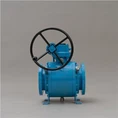
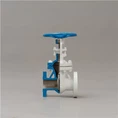
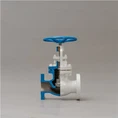
In numerous industrial sectors, such as petroleum, chemical, power generation, and water treatment, the stable and reliable operation of valves is crucial for ensuring the safe, stable, and efficient operation of the entire system. With the continuous advancement of science and technology, valves are facing higher demands, necessitating the design of valves with high reliability, corrosion resistance, and long life. The resilient wedge gate valve, a common valve type, has gained widespread use in various industries due to its unique structure and outstanding performance. Because this valve type possesses a certain opening and closing force, it is also known as an opening control valve or pressure regulating valve. This device offers excellent flow control capabilities, enabling both opening and closing operations, thereby ensuring stable operation of pipeline systems. It also offers flexible and convenient opening and closing, simple operation, and high sealing reliability. So, what exactly is the working mechanism of a resilient wedge gate valve? How should it be properly installed and used? This article will provide an in-depth analysis and discussion of these issues.
How does the resilient wedge structure in a resilient wedge gate valve achieve sealing?
Overview of the Elastic Wedge Structure
The wedge structure in an elastic wedge gate valve is considered one of its key components. A wedge gate valve primarily consists of a valve body and a cone. Its shape is typically wedge-shaped. This unique design ensures a tighter engagement with the valve seat during closing, achieving a sealing effect. Because this mechanism must withstand significant pressure during operation, it requires a corresponding elastic element to bear this load. This element is primarily constructed of metal. When selecting materials, the elastic wedge structure typically uses materials with excellent elasticity and toughness, such as stainless steel and alloy steel. Specific heat treatment processes are used to impart a certain degree of elastic deformation. Therefore, for standard valves, the presence of the elastic wedge structure inherently provides sufficient load-bearing capacity. For example, in applications requiring stringent sealing performance, an elastic wedge structure made of high-quality stainless steel not only ensures structural strength but also exhibits excellent elastic recovery. Furthermore, since the elastic wedge structure itself represents a novel valve core structure, it can be custom-manufactured to meet specific requirements. Manuals and textbooks related to valve design, such as "Valve Design and Selection," provide in-depth explanations of the basic form and material properties of elastic wedge structures.
Sealing Principle
When an elastic wedge gate valve closes, the pressure of the medium acts on the wedge structure. The wedge structure consists of a spring fixed in the valve body and a piston slidably supported on the valve stem, with its free end extending. Due to its inherent elastic properties, the wedge structure may undergo elastic deformation when subjected to medium pressure. As the wedge thickness increases and the fluid flow rate decreases, the elastic deformation gradually disappears. This deformation strengthens the contact between the wedge structure and the valve seat, resulting in an effective seal. Therefore, to ensure a good sealing effect, the wedge structure must have sufficient rigidity and strength. The unique design of the sealing surface significantly affects its sealing performance. Therefore, to achieve ideal sealing results, it is necessary to select appropriate materials and processing techniques. Surface roughness is considered a key factor. Excessive roughness may cause leakage, while too low a roughness may increase processing costs. To achieve good sealing and processing efficiency, it is essential to select an appropriate surface roughness, thereby extending the service life of the entire system. Generally, to ensure excellent sealing, the surface roughness of the sealing surface must be maintained within a specific limit. Therefore, different valve core types require different processing techniques. Furthermore, the hardness of the sealing surface also affects sealing performance. For valves made of soft materials, the sealing surface is generally manufactured from a softer, more elastic material. A sealing surface with a higher hardness effectively resists abrasion from the media, thereby extending the valve's service life. However, this hardness must also be consistent with the hardness of the valve seat to prevent poor sealing due to a significant hardness difference. The elastic wedge structure is a new sealing surface design. Academic papers and patents related to valve sealing technology have thoroughly studied and analyzed the sealing mechanism and design characteristics of the elastic wedge structure.
Factors Influencing Sealing Performance
The sealing performance of elastic wedge gate valves is affected by various factors, including media pressure, temperature, and flow rate. Through analysis and calculation, the velocity and pressure distribution of the fluid within the wedge gate valve body under different operating conditions were determined. Sealing effectiveness is significantly affected by the primary factor of medium pressure. Considering the effects of medium pressure, numerical simulations were used to investigate the flow and temperature distributions within a wedge-shaped gate valve under various operating conditions. As medium pressure gradually increases, the pressure on the wedge structure increases, and its elastic deformation also increases, potentially positively impacting its sealing effectiveness. As the fluid flow rate changes, the inherent rigidity of the wedge structure maintains a certain clearance between the wedge and the valve body, preventing slippage on the sealing surface. However, when the pressure exceeds the upper limit of the wedge's elasticity, the wedge may become damaged, negatively impacting the sealing performance. Therefore, studying sealing performance in high-temperature environments is crucial. Thermal expansion and contraction of materials primarily reflect the effect of temperature on their sealing properties. As temperature increases, the thermal expansion coefficient decreases, placing greater forces on the wedge. Because different materials have different expansion coefficients at different temperatures, this can cause variations in the clearance between the wedge and the valve seat, negatively impacting sealing performance. In addition, there is a speed difference when the fluid flows through the sealing ring. Therefore, it is necessary to study the influence of the fluid flow rate on parameters such as the valve disc opening force and leakage. The performance of the seal will be affected to some extent by the flow rate. In addition, the fluid pressure will also affect the sealing performance. High-speed flowing materials may cause erosion and wear of the sealing surface, thereby reducing its sealing effectiveness. Therefore, some measures must be taken to improve the flow performance of the fluid and reduce friction loss to improve the lubrication state between the sealing surfaces and ensure the reliability of the sealing operation. In actual engineering application scenarios, case analysis and experimental reports provide us with data and examples of how these variables specifically affect the sealing performance.
How do the internal components of a resilient wedge gate valve move during opening and closing?
Opening Process
To open a resilient wedge gate valve, the operator rotates the handwheel or activates an actuator, such as an electric device, to rotate or raise the valve stem. The inherent rigidity of the wedge structure allows the valve stem to slide back and forth in a straight line, thereby controlling the valve's opening and closing state. The valve stem and wedge structure are connected using a special connection method, which converts the movement of the valve stem into a linear motion pattern of the wedge structure. Therefore, if the wedge structure designed using traditional methods fails to meet the required opening and closing force, a mechanical analysis method can be used to determine the appropriate installation position. For example, in some commonly used resilient wedge gate valve designs, the valve stem is connected to the wedge structure via threads. As the valve stem rotates, the wedge structure moves upward along the stem axis, gradually moving away from the valve seat, causing the valve to gradually open. This movement is a typical mechanical transmission mechanism. Textbooks and academic papers provide in-depth explanations and illustrations of valve structural design and dynamic analysis.
Closing Process
When the valve is closed, the actuator drives the valve stem in the reverse direction. This creates a conical cavity within the valve body, generating a certain pressure differential and friction, causing relative motion between the piston and pushrod. As the valve stem moves, the wedge structure moves in the reverse direction, gradually approaching the valve seat. When the valve stem reaches a certain position, fluid resistance and friction cause the wedge structure to move away from the valve seat and return to its initial position, completing the closing action. As it approaches the valve seat, the elastic wedge structure begins to exhibit its elastic deformation properties. Once the wedge structure enters the valve body, it is affected by fluid forces and friction, causing a certain degree of rotational displacement, creating a gap between the valve seat and the guide ring, which can lead to leakage. When the wedge structure comes into contact with the valve seat, the combined effects of the medium pressure and the valve stem pressure cause it to elastically deform, forming a tight fit against the valve seat, thus achieving a seal. Due to its excellent sealing properties, the wedge structure is widely used in hydraulic and pneumatic systems. During the closing process, the elastic deformation of the elastic wedge structure is crucial for ensuring sealing performance. It compensates for gaps between the sealing surfaces caused by machining errors, wear, and other factors, ensuring that the valve does not leak when closed. Through theoretical derivation and calculations based on actual operating conditions, formulas for calculating the opening force of this mechanism under different conditions have been developed. This process is also discussed in depth in textbooks and academic papers on valve structural design and motion analysis.
Coordination of Internal Component Motion
The movement relationships between key components, such as the valve stem, wedge structure, and valve seat, must be highly coordinated to ensure stable and reliable valve operation. Because these components mesh to achieve transmission and coordination during operation, a certain degree of relative motion is inevitable. Asynchronous movement between these components can cause valve sticking, leakage, and other related issues. Therefore, for valves, maintaining appropriate clearances between various components is crucial to meet these requirements. For example, the rotation or lifting speed of the valve stem must match the movement speed of the wedge structure; otherwise, the wedge structure may become stuck on the valve seat. Therefore, good clearances between these components are essential to ensure rapid response. Furthermore, the positioning and shape of the valve seat must match the wedge design to ensure an excellent seal when the valve is closed. Therefore, the internal structural parameters of different valve types should be compatible. Through mathematical modeling and experimental research, relevant studies or engineering practice reports on valve dynamics analysis have conducted a detailed analysis of the kinematic coordination of the valve's internal components and, based on this, proposed targeted optimization solutions.
How does the working principle of a flexible wedge gate valve differ from other types of gate valves?
Comparison with rigid wedge gate valves
Flexible wedge gate valves and rigid wedge gate valves differ significantly in their structural design. Due to the different loads they experience, they utilize two types of sealing surfaces: a flexible wedge and a fixed wedge. The wedge structure of a rigid wedge gate valve does not exhibit elastic deformation, and its sealing performance relies primarily on the precise fit between the wedge and the valve seat. Due to severe wear on the sealing surface and poor sealing performance, traditional rigid wedge gate valves cannot meet the requirements of high-pressure and high-flow conditions. The wedge-shaped structure of a flexible wedge gate valve possesses certain elastic properties, allowing it to deform elastically under pressure, thereby better adapting to the valve seat design and achieving a sealing effect. At the same time, as the valve opening increases, the elastic deformation gradually increases, resulting in a decrease in sealing performance. Elastic deformation plays a crucial role in sealing performance and service life. This paper studies a model of a rigid wedge gate valve. Through finite element simulation analysis, the stress distribution and displacement curves of the valve under different operating conditions are analyzed and compared with theoretically calculated values. Because the flexible wedge structure can effectively compensate for minor imperfections and wear on the sealing surface, it exhibits more robust sealing performance and a longer service life. Furthermore, flexible wedge gate valves avoid gap leakage caused by thermal expansion due to temperature fluctuations, making them more suitable for use in high-temperature and high-pressure environments than traditional rigid wedge gate valves. In contrast, when the sealing surface of a rigid wedge gate valve becomes worn or deformed, its sealing effectiveness is significantly reduced, requiring more frequent maintenance and replacement. Currently, the two most commonly used rigid gate valves in China and abroad are metal wedge and rubber types. Regarding valve type comparisons, relevant academic papers and industry research reports have conducted in-depth comparisons and analyses of the structures and functional characteristics of these two types of gate valves.
Comparison with Parallel Gate Valves
The operating mechanism of parallel gate valves differs significantly from that of resilient wedge gate valves. Resilient wedge gate valves require frequent adjustment and maintenance during use. The gate disc of a parallel gate valve moves parallel to the valve seat, achieving its sealing effect through the parallel contact between the disc and the valve seat. Traditional gate valves use a rigid contact seal, which results in high leakage due to high friction. Resilient wedge gate valves achieve a tight seal with the valve seat through the elastic deformation of their wedge structure. Therefore, both types of gate valves require a certain amount of installation space and an appropriate clearance and pressure differential between the disc and the seat for proper operation. In terms of sealing technology, parallel gate valves primarily rely on a flat seal between the disc and the seat, which places high demands on the manufacturing precision of the sealing surface. Resilient wedge gate valves, due to the elastic deformation caused by their wedge structure, have relatively loose requirements on the manufacturing precision of the sealing surface. The resilient wedge gate valve designed in this article utilizes this unique sealing method, employing a spring as an elastic element between the gate disc and the valve seat to achieve the sealing effect. In terms of movement, the gate disc of a parallel gate valve moves in a straight line, while the wedge structure of a resilient wedge gate valve moves along a diagonal line at a specific angle. This article will explore the advantages and disadvantages of these two different gate valve types from these two perspectives. Regarding valve type comparisons, relevant academic papers and industry reports provide in-depth explanations of the operating mechanisms and unique properties of these two types of gate valves.
Introduction to Other Gate Valves
In addition to rigid wedge gate valves and parallel gate valves, there are also knife-type gate valves and lifting stem gate valves. Among these gate valves, knife-type gate valves have a promising application prospect. The gate disc design of knife-type gate valves resembles a knife, making them particularly suitable for media containing solid particles or fibers, effectively interrupting the flow of the medium. Due to their excellent opening and closing characteristics, they are widely used in industries such as the petrochemical industry. Lifting-stem gate valves use the upward and downward movement of the valve stem to actuate the gate disc, thereby opening and closing the valve. This design is both simple and easy to operate. Furthermore, this type of gate valve offers high opening and closing force, making it suitable for applications requiring high flow rates at relatively low pressures, such as seawater desalination plants. Regarding valve classification and selection, relevant textbooks and guides provide an overview of the operating mechanisms and characteristics of these gate valves, providing valuable reference for selecting the appropriate gate valve for actual engineering projects.
Conclusion
The resilient wedge gate valve utilizes its unique elastic wedge design to ensure excellent sealing. A three-dimensional finite element method was used to simulate and analyze the gate disc, revealing the pressure distribution at the valve seat under different operating conditions, providing a basis for design optimization. During valve opening and closing operations, the coordinated operation of the internal components ensures stable and reliable operation. Advances in hydraulic technology have placed higher demands on hydraulic fluids. To meet these demands, a new type of flexible valve seat-the resilient wedge gate valve-has been developed. Compared to other types of gate valves, the resilient wedge gate valve demonstrates unique characteristics and advantages in multiple aspects, including sealing technology and movement. This article introduces the operating principles and design methods of resilient wedge gate valves and conducts experimental research on this type of gate valve. Due to their excellent sealing performance and long service life, resilient wedge gate valves are widely used in various industries, including the petroleum, chemical, power, and water treatment industries. This article primarily introduces resilient wedge gate valves and analyzes their structural components and operating principles. It also illustrates their practical application in production using specific engineering examples. With the continuous advancement of industrial technology, resilient wedge gate valves are also undergoing continuous optimization and improvement, providing stronger support for industrial production. Their future application potential is enormous.