

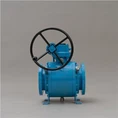

As an important fluid control device, the ear shaft ball valve features a unique structure and outstanding performance characteristics. It is usually composed of a valve body, a ball, an ear shaft, a valve seat and other components. The ball is supported in the valve body through the ear shaft and can rotate 90 degrees to complete the opening and closing actions of the valve. This design endows the ear shaft ball valve with advantages such as good sealing performance, rapid opening and closing, low fluid resistance, and strong corrosion resistance, enabling it to adapt to various complex working conditions and medium conditions. For this reason, the ear shaft ball valve has been widely applied in many industrial fields and has become one of the key devices to ensure the stable operation of industrial production processes.
The specific application scenarios of ear shaft ball valves in the chemical industry
Fluid control in chemical production processes
Medium transportation and cutting off in chemical reaction processes
In chemical production, chemical reactions need to take place under specific conditions, and there are strict requirements for the flow rate, pressure and composition of the reaction medium. Ear shaft ball valves can quickly and accurately cut off or convey media, ensuring the stability and safety of the reaction process. For instance, in some reactions involving highly corrosive media, the ear shaft ball valve is made of special corrosion-resistant materials, which can effectively prevent the medium from eroding the valve and ensure its sealing performance and service life. Meanwhile, its rapid opening and closing characteristics can quickly cut off the medium supply in emergency situations, preventing the expansion of accidents.
Flow regulation in the production processes of different chemical products
The production of chemical products usually involves multiple stages, and each stage has different requirements for the flow rate of the medium. Ear shaft ball valves can precisely control the flow of the medium by adjusting the opening degree, meeting the demands of different production processes. For instance, in polymerization reactions, the flow rate of monomers needs to be strictly controlled to ensure the stability of the molecular weight and performance of the polymer. The flow regulation function of the ear shaft ball valve can achieve precise control of the individual flow rate and improve product quality.
Application of chemical equipment matching
Control of the inlet and outlet of equipment such as reaction vessels and distillation columns
Reaction vessels and distillation columns are commonly used equipment in chemical production. The control of their inlet and outlet is of vital importance to the normal operation of the equipment and the quality of the products. Ear shaft ball valves have excellent sealing performance and corrosion resistance, and can adapt to high-temperature, high-pressure and corrosive medium environments in reaction vessels and distillation towers. For instance, installing an ear shaft type ball valve at the feed port of the reaction vessel can accurately control the amount and speed of material entry, preventing material leakage and loss of control of the reaction. Installing ear shaft ball valves at the top and bottom outlets of the distillation column can achieve precise separation and control of fractions and residual liquids.
Liquid level control and medium discharge of chemical storage tanks
Chemical storage tanks are used to store various chemical raw materials and products. The control of liquid level and the discharge of medium require reliable valve equipment. Ear shaft ball valves can be used in conjunction with liquid level sensors and control systems to achieve automatic control of the liquid level in storage tanks. When the liquid level reaches the set value, the valve automatically opens or closes to ensure the stability of the liquid level in the storage tank. Meanwhile, during the medium discharge process, the ear shaft ball valve can quickly and thoroughly discharge the medium, reduce residue and improve the utilization rate of the storage tank.
The application of ear shaft ball valves in the oil and gas industry
Petroleum extraction stage
Drilling fluid control during oil well drilling
During the process of oil well drilling, drilling fluid plays important roles such as cooling the drill bit, carrying cuttings and balancing formation pressure. Ear shaft ball valves can be installed in the drilling fluid circulation system to control the flow and pressure of the drilling fluid. For instance, during the drilling process, the flow rate and pressure of the drilling fluid need to be adjusted according to the drilling depth and formation conditions. The ear shaft ball valve can achieve precise control by adjusting the opening degree, ensuring the smooth progress of the drilling operation. Meanwhile, its excellent sealing performance can prevent drilling fluid leakage and reduce environmental pollution.
Valve control of tubing and casing during crude oil extraction
In the process of crude oil extraction, oil pipes and casing are important transportation channels. Ear shaft ball valves are installed on oil pipes and casing and can control the extraction and injection of crude oil. For instance, during the oil extraction process, the output of crude oil can be regulated by opening and closing the ear shaft ball valve on the oil pipe. During water or gas injection extraction, water or gas can be injected by controlling the valves on the casing, thereby enhancing the crude oil recovery rate. The high-pressure resistance and corrosion resistance of the ear shaft ball valve can adapt to the harsh environment underground in oil Wells, ensuring the long-term stable operation of the valve.
Natural gas processing and transportation
Process flow control of natural gas purification plants
Natural gas purification plants need to carry out desulfurization, dehydration, dehydrocarbon and other treatments on the extracted natural gas to meet the quality requirements for pipeline transportation and user use. Ear shaft ball valves play a crucial control role in various process links of natural gas purification plants. For instance, in the desulfurization device, the flow rate and pressure of the hydrogen sulfide absorbent are controlled by ear shaft ball valves to ensure the desulfurization effect. In the dehydration device, the circulation and regeneration process of the desiccant is controlled to ensure that the moisture content of the natural gas meets the standards. The rapid opening and closing and precise control functions of the ear shaft ball valve can enhance the production efficiency and product quality of natural gas purification plants.
The cutting off and regulation of long-distance natural gas pipelines
Long-distance natural gas pipelines are crucial channels for transporting natural gas from production areas to users, and the safe operation of these pipelines is of vital importance. Ear shaft ball valves are installed on long-distance natural gas pipelines and can achieve the functions of cutting off and regulating the pipelines. When pipeline maintenance, repair or accidents occur, the natural gas supply can be quickly cut off by closing the ear shaft ball valve, preventing the expansion of the accident. Meanwhile, during the operation of the pipeline, the flow and pressure of natural gas can be controlled by adjusting the opening degree of the valve, ensuring the safe and stable operation of the pipeline.
The important applications of ear shaft ball valves in other industrial fieldsThe application of ear shaft ball valves in the oil and gas industry
Electric power industry
Steam system control in thermal power plants
Thermal power plants generate steam by burning fuels such as coal and natural gas to drive steam turbines for power generation. The control of the steam system is crucial for power generation efficiency and equipment safety. Ear shaft ball valves are installed on steam pipelines and can control the flow rate, pressure and temperature of steam. For instance, installing an ear shaft ball valve on the main steam pipeline of a boiler can adjust the output of steam to meet the load requirements of the steam turbine. In the steam desuperheating and pressure reducing system, the ear shaft type ball valve can precisely control the mixing ratio of desuperheating water and steam, ensuring the stability of steam parameters. The high-temperature and high-pressure performance of the ear shaft type ball valve can adapt to the harsh working conditions of the steam system in thermal power plants.
Water turbine feed control in hydropower plants
Hydroelectric power plants utilize the energy of water flow to drive turbines for power generation. The control of water inflow to the turbine directly affects the power generation efficiency and equipment safety. The ear shaft ball valve is installed on the inlet pipe of the turbine and can control the flow rate and pressure of the water. For instance, during the start-up and shutdown of the unit, the water intake of the turbine can be controlled by adjusting the opening degree of the ear shaft ball valve, thus ensuring the smooth start-up and shutdown of the unit. During the operation of the unit, the valve opening should be adjusted in a timely manner according to the load changes to ensure the efficiency and stability of the water turbine. The wear resistance and corrosion resistance of the ear shaft type ball valve can adapt to the characteristic of high sand content in the water flow of hydropower plants.
Metallurgical industry
Valve control of blast furnace gas pipelines
Blast furnace gas is an important secondary energy source in the metallurgical industry. The safe operation of its pipeline system is of vital importance to the energy utilization and environmental protection of enterprises. The ear shaft ball valve is installed on the blast furnace gas pipeline and can control the flow and pressure of the gas. For instance, during the shutdown or maintenance of a blast furnace, the gas supply can be cut off by closing the ear shaft ball valve, ensuring the safety of the maintenance personnel. During the process of gas recovery and utilization, the distribution and utilization efficiency of gas can be controlled by adjusting the opening degree of the valve. The high-temperature resistance and corrosion resistance of the ear shaft type ball valve can adapt to the high-temperature, dust-containing and corrosive characteristics of blast furnace gas.
Steel water transportation and control in the steelmaking process
During the steelmaking process, molten steel needs to be transported from the converter or electric furnace to the continuous casting machine for casting. The transportation and control of molten steel require reliable valve equipment. The ear shaft ball valve is installed at the bottom of the molten steel ladle and the tundish, and can control the outflow speed and flow rate of the molten steel. For instance, during the continuous casting process, by precisely controlling the opening degree of the ear shaft ball valve, the uniform casting of molten steel can be ensured and the quality of the cast billet can be improved. The high-temperature and wear-resistant performance of the ear shaft ball valve can adapt to the high temperature and erosion of molten steel, ensuring the long-term stable operation of the valve.
Water treatment industry
The control of sewage discharge and treatment processes in sewage treatment plants
Sewage treatment plants need to carry out a series of treatments on sewage to meet discharge standards or reuse requirements. Ear shaft ball valves play a crucial control role in various treatment processes of sewage treatment plants. For instance, in a sewage lift station, the lifting flow of sewage is controlled by ear shaft ball valves to ensure the normal operation of the station. In the sewage treatment process, such as in aeration tanks and sedimentation tanks, the flow of sewage and the treatment time can be controlled by adjusting the opening degree of valves, thereby improving the treatment effect. The corrosion resistance of the ear shaft ball valve can adapt to the corrosive environment of sewage, ensuring the reliable operation of the valve.
Regulation of water supply pipelines in waterworks
Waterworks need to deliver treated tap water to users. The regulation of water supply pipelines is crucial for ensuring the stability of water supply pressure and water quality. Ear shaft ball valves are installed on the water supply pipelines of waterworks and can control the flow and pressure of water. For instance, during peak urban water usage periods, the water supply can be increased by adjusting the opening degree of valves to meet users' demands. When pipelines are under inspection or maintenance, the water flow can be cut off by closing the valve, which is convenient for construction. The ear shaft type ball valve has good sealing performance, which can prevent water leakage and ensure water supply safety.
Conclusion
In conclusion, the ear shaft ball valve, with its unique structural design and outstanding performance characteristics, has been widely applied in numerous industrial fields such as chemical engineering, petroleum and natural gas, power, metallurgy, and water treatment. In the chemical industry, it has achieved precise control over the chemical reaction process and equipment matching. In the field of oil and gas, it ensures the safety and efficiency of oil extraction and natural gas processing and transportation. In the power, metallurgy and water treatment industries, it has also played a key role in ensuring the stable operation of production processes in various industries. The wide application of ear shaft ball valves not only enhances the efficiency and quality of industrial production, but also reduces production costs and safety risks, which is of great significance for promoting the development and progress of industry. With the continuous development and innovation of industrial technology, the ear shaft ball valve will also be constantly improved and perfected, providing more high-quality and reliable fluid control solutions for various industrial fields.