

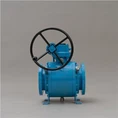
Threaded ball valves are the core components of fluid control systems. They are widely used in many industries such as petroleum, chemical, electric power and pharmaceuticals. Among them, hydraulically driven ball valves are the most widely used. Their core responsibility is to manage fluid flow and ensure the stable operation of the entire system. With the continuous development of industrial technology and computer technology, valve products are gradually moving towards automation and intelligence, which provides good development opportunities for threaded ball valves. However, in actual use, threaded ball valves may encounter a variety of problems, such as leakage, jamming, operational challenges and damage to some components. If these faults are not handled in time, serious consequences will occur. Such faults will not only damage the robustness of the system, but also bring potential risks to the safety of production. In addition, once a threaded ball valve fails, it also needs to be handled in time to restore normal working conditions. Therefore, it is particularly important to master the common faults of threaded ball valves and the corresponding maintenance skills.
What are the common types of faults of threaded ball valves?
Leakage fault
In threaded ball valves, leakage faults are considered to be one of the most common problems. In the actual production process, leakage may occur due to improper operation and changes in environmental conditions. If the valve fails to close completely, or the seals age and are improperly installed, fluid may leak from the inside of the valve. Typical symptoms of leakage failure include dripping and seepage, which, in severe cases, may lead to the complete failure of the entire system.
Stuck or difficult to operate
After long-term use, threaded ball valves may become stuck or have operational challenges due to factors such as blockage by impurities and wear of threads. At this time, if the valve seat is opened manually for dredging, it is easy to get stuck. In this case, the valve may not open or close normally, which may have an adverse effect on the normal operation of the system.
Damaged components
Components in threaded ball valves, such as balls, valve seats and handles, may be damaged by friction, corrosion and other factors during long-term use. When the system needs to be repaired or replaced, the entire valve is often removed and cleaned before it can be put into use again. These damaged components will not only weaken the performance of the valve, but may also bring potential safety risks to the entire system.
How to diagnose leakage failures of threaded ball valves?
Check the seals
Once a leak is detected in a threaded ball valve, the first task is to confirm the current condition of the seals. After the sealing test, if the sealing cannot be guaranteed, the valve should be fully inspected and maintained. Check whether the seals show signs of aging, wear or damage, and replace them in time if necessary.
Test the pressure
The threaded ball valve is pressure tested using a pressure test instrument to determine the leak point. When testing, we should gradually increase the pressure and check whether the valve is leaking.
Observe the flow of the fluid
By analyzing the flow direction and flow rate of the fluid, we can preliminarily determine the specific location of the leak. When a pipeline leaks, there is a different degree of pressure loss inside it, and the friction heat generated by the collision between gas molecules is the main cause of this phenomenon. In the vicinity of the leak point, the flow rate and flow direction of the fluid may change.
What are the repair methods for threaded ball valves that are stuck or difficult to operate?
Clean impurities
When a threaded ball valve is stuck or has difficulty in operation, the first task is to confirm whether there is impurity blocking the valve. If there are a lot of impurities, you can use a soft brush or cloth to clean it, and then use a hard object to smooth it. If necessary, appropriate tools should be used to remove impurities.
Lubricate the thread
By lubricating the thread, friction and wear can be effectively reduced, thereby overcoming the difficulties in jamming or operation. Common lubrication methods include sliding, rolling, extrusion, etc. In the process of selecting lubricants, decisions should be made based on the working environment of the valve and the materials used.
Adjust or replace parts
If the problem cannot be solved by removing impurities and lubricating the threads, the damaged part may need to be adjusted or replaced. Therefore, for those parts that are frequently used and severely worn, they must be inspected, cleaned and reprocessed in time. In the process of replacing parts, it is necessary to ensure that the new parts are compatible with the old parts, and to strictly follow the correct installation process.
How to replace the damaged parts of the threaded ball valve?
Disassemble the old parts
Before disassembling the old parts, the valve must be closed first and the power or air source must be cut off. After cleaning the disassembled parts with alcohol, install them in the usual way and check whether there is any looseness in each part. Use appropriate tools to gently disassemble the old parts to prevent damage to other areas.
Prepare new parts
When selecting new components, you must ensure that they are compatible with the previous components and meet the system standards. A comprehensive inspection must be carried out before assembly to ensure that the dimensional accuracy and surface roughness of the parts meet the design requirements. During the manufacturing process of new components, their quality and integrity need to be carefully checked.
Install new parts
During the installation of new parts, the correct installation process must be strictly followed and appropriate tools must be used for operation. After installation, it is necessary to check whether the working performance of the valve is in normal condition.
What are the preventive maintenance measures for threaded ball valves?
Regular inspection
Periodic inspection of threaded ball valves helps to identify possible problems in a timely manner and take appropriate solutions accordingly. In actual work, the corresponding inspection method should be adopted according to different types of valves. The scope of inspection covers aspects such as seals, threads and wear conditions of components.
Cleaning and Lubrication
Periodic cleaning and lubrication of valves can help extend their service life. The main failure forms of valves are wear, rust and carbon deposits. When cleaning, appropriate cleaning agents should be selected; when lubricating, appropriate lubricants should be selected.
Correct operation
If threaded ball valves are operated correctly, damage caused by excessive force or improper operation can be prevented. Correct use of threaded ball valves can prevent valve damage, blockage and leakage. When performing operations, the operating instructions must be strictly followed and safety must be ensured.
In summary, mastering the common faults of threaded ball valves and the corresponding maintenance techniques is very important to ensure that the entire system can work properly. Therefore, it is important to pay attention to its inspection and maintenance in daily work. Preventive maintenance measures such as periodic inspection, cleaning, lubrication and correct operation can reduce the possibility of failure and extend the service life of the valve. In addition, a reasonable maintenance plan should be formulated according to the actual situation to ensure that the system can operate safely and stably for a long time. At the same time, when the system fails, the corresponding maintenance measures should be implemented immediately to ensure the stability and safety of the system operation.