





In industrial piping systems, globe valves is an important control element, and the size of the valve directly affects the operating efficiency, safety and maintenance cost. For DIN-compliant globe valves, size selection necessitates a combination of factors, including nominal diameter (DN), pressure level, face size, material properties and fluid operating conditions. In this paper, the the sizing principles of DIN cut-off valve is systematically expounded from three aspects: technical specification, calculation methods and practical application.
1.Determination (DN nominal diameter
Nominal diameter is the core parameter of valve sizing and must be selected according to flow requirements and fluid characteristics of the piping system.
1.1 Flow Calculation and Diameter Matching
The minimum diameter required can be calculated using formulas based on design flow rate (Q) and fluid velocity (v):
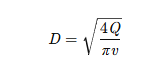
The choice of fluid velocity (v) depends on the type of fluid:
Liquid media: velocities are Typically between 1-3 m/s. For liquids with high viscosity, the velocity should be reduced to minimize pressure drop.
Gas medium: For low pressure gases, the velocity may be between 10 and 20 m/s, and for high pressure gases, the velocity should be limited to less than 30 m/s to avoid noise and vibration.
For example, for water systems with a design velocity of 100 m3/h and a selected velocity of 2 m/s, the calculated diameter is:
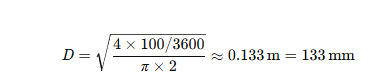
In accordance with DIN standards, a DN150 globe valve should be selected.
1.2 Standard Nominal Diameter Series
The nominal diameter of DIN-standard globe valves is generally between DN15 and DN1200, and the common range of uses is:
Small caliber valves (DN15-DN100): suitable for instrument control, sampling and other precision applications.
Medium diameter valves (DN125-DN400): Used for conventional process pipelines such as steam and cooling water systems.
Large caliber valves (DN450-DN1200): suitable for high pressure main steam pipelines or large chemical plants.
1.3 Considerations for Reduced Diameter Design
If there is local resistance in the system or a flow restriction is required, a design to reduce diameter (the valve body diameter is smaller than the pipeline diameter) may be used. However, it is important to verify that the diameter reduction pressure drop meets process requirements and to ensure that the valve seat velocity does not exceed the material's allowable value (typically ≤50 m/s).
2. Basis for selection of Pressure Rating (PN)
The pressure level determines the bearing capacity and sealing performance of the valve and must be selected according to the maximum operating pressure (Pw) and temperature (T) of the system.
2.1 DIN Pressure Rating System
The rated pressure of the DIN-standard globe valves is usually PN1.6 to PN420, equivalent to ASME Class 150 to 2500. The choice must satisfy:
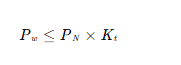
where Kt
It is a temperature correction factor (derived from a DIN standard curves) that reflects the strength degradation of the material at elevated temperatures.
For example, for a steam system with a design pressure 4.0 MPa and a working temperature of 300°C, the temperature correction factor for carbon steel at 300°C is approximately Kt
≈0.85.) The minimum rated pressure required is:
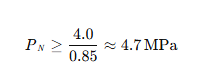
a PN63 globe valve should be selected in accordance with DIN standards.
2.2 Matching Material of pressure levels
The allowable stress of different materials varies with temperature, and suitable materials need to be selected according to the characteristics of the medium:
Low temperature applications (≤200°C): Carbon steel (e.g., WCB) or cast iron is preferred due to lower costs.
High-temperature applications (200-500°C): Chromium-molybdenum steel (e.g., WC9) or stainless steel (e.g. 304, 316) is required.
Corrosive media: Corrosion-resistant materials, such as hartensils or Monel alloys, should be used and rated pressure should be increased to compensate for the loss of strength.
3. Standardized Requirements for face-to-face dimensions
Face-to-face dimensions directly affect the valve's installation space and pipeline layout, and DIN standards strictly regulate these dimensions for globe valves.
3.1 DIN 3202 Standard
DIN 3202 specifies the face size (F-F) and end-to-end size (E-E) of flanged globe valves to ensure compatibility with piping systems. For example:
DN50 PN16 globe valve: 230mm face to face and 290mm end to end.
DN200 PN40 globe valve: 600mm face to face and 730mm end to end.
3.2 Control face-to-face dimensions tolerances.
DIN standards has strict requirements for manufacturing tolerances for face-to-face dimensions:
DN ≤ 250 mm: Tolerance ±1.5 mm.
DN ≥ 300 mm: Tolerance ±3.0 mm.
Exceeding these tolerances may hinder proper valve installation or cause seal failure and must therefore be rigorously verified when slurry is applied.
4. Wall Thickness Calculation and Strength Verification
Valve wall thickness is the key parameter to ensure valvebearing capacity and must be determined by theoretical calculation and empirical correction.
4.1 Classification Thin-Walled and Thick-Walled Valve Bodies
The calculation method is based on the ratio of outside diameter (Do) to inside diameter (Di):
Thin-walled valve body (Do/Di ≤ 1.2): calculated using the thin-walled cylinder formula.
Thick-walled valve body (Do/Di > 1.2): Calculated using the thick-walled cylinder formula.
4.2 Wall Thickness Calculation Formulas
Thin-walled valve body:
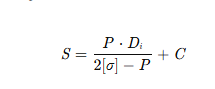
In the following locations:
S Class: Calculated wall thickness (mm);
P Grade:Design pressure (MPa);
Di:Valve body diameter (mm);
[σ]:Material allowable stress (MPa, according to DIN standards);
C Class: Corrosion allowance (typically 3-6 mm).
Thick-walled valve body:
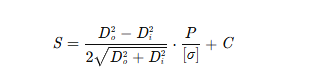
P Grade
+ C as required
4.3 Strength Verification
Calculated wall thickness must be:
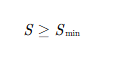
where Smin
It is the minimum wall thickness specified in DIN standards (e.g. 10 mm for a PN16 DN100 carbon steel globe valve).
V. Practical applications of dimensions
Case 1: Steam Pipeline cut-off valve size
chemical plant are required to install globe valve on a DN80 steam pipeline designed to operate at a pressure of 2.5 MPa and a temperature of 350°C. The sizing steps are as follows:
Nominal Nominal diameter selection: DN80 cut-off valve is used as the diameter of the pipe is DN80.
Pressure rating selection: temperature correction factor for carbon steel at 350°C is approximately Kt
≈0.7.) Therefore:
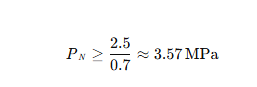
A PN40 globe valve.
3. Face size: According to DIN 3202, the face size of a DN80 PN40 globe valve is 310mm.
4. Wall thickness verification: Calculated wall thickness is 8.2 mm and does not meet the minimum wall thickness requirement (10 mm) of the DIN standard. Therefore, the material or pressure level must be adjusted.
Case 2: Measurement of the size of the cut-off valve for corrosive media
seawater desalination plant are required to install globe valve on a DN150 pipeline with a design pressure of 1.0 MPa, a working temperature of 60°C and chlorine in seawater. The sizing steps are as follows:
Nominal diameter selection: Select A DN150 globe valve.
Pressure rating options: Low temperature, Kt.
≈1.0
a PN16 globe valve.
Material choice: Carbon steel corrodes easily in chlorinated media, so choose 316L stainless steel.
Face size: According to DIN 3202, the face size of a DN150 PN16 globe valve is 400mm.
Wall thickness verification: 316L stainless steel has a high allowable stress and a calculated wall thickness of 6.5 mm meets the minimum wall thickness requirement (8 mm).
6. Common Misunderstandings and Mitigation Strategies in Dimension Measurement
6.1 Ignore the Impact of temperature on Pressure Rating
Myth: Pressure levels are selected solely according to design pressure and do not take into account material strength degradation of the material at high temperatures.
Mitigation: Strict reference to DIN standard temperature-pressure curves to ensure
Pw≤ PNx kg tons
6.2 Blind Pursuit Large Diameters
Myth: Choose an oversized diameter to reduce pressure drop, resulting in cost increases and installation difficulties.
Mitigation: The minimum diameter is determined by velocity calculations and optimized according to the resistance of the system.
6.3 IgnoreFace Size Tolerance
Myth: Failed to verify compatibility of valve face size with pipeline layout, resulting in installation conflicts.
Mitigation: Provide detailed pipeline layout at the sizing stage and require suppliers to produce in accordance with DIN 3202 standards.
Conclusion:
The selection of DIN-standard globe valves is a systematic process that requires a combination of nominal diameter, rated pressure, face size, wall thickness calculation and material selection. By strictly adhering to DIN standards, combining theoretical calculation with practical application, the risk of valve sizing can be effectively reduced and reliable operation under complicated working conditions can be ensured. As industrial piping systems evolve toward higher pressure, temperature, and corrosion, DIN globe valves sizing technology will face greater challenges, requiring ongoing standard research and technological innovation to meet changing industry demands.