

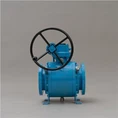

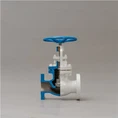

Designed to German industrial standards, the DIN globe valves is known for its high accuracy, reliability and adaptability. These valves control the flow of fluid by moving in a straight line, enabling switching and flow regulation. Widely used in petrochemicals, power generation, marine engineering, pharmaceuticals, food processing, metallurgy and other high-demand industries. Combining with the characteristics of technology and the specific requirements of industry, this paper analyzes the typical industrial applications.
1.Petrochemical Industry: Precision control of high temperature, high pressure, Corrosive Media
Petrochemical production involves extreme temperature, pressure and corrosive substances, and strict requirements are put forward for sealing, corrosion resistance and corrosion resistance of valves. The advantages of DIN globe in this area are mainly shown in the following aspects:
1.1 High temperature and high pressure design
These valves are made of cast steel, stainless steel and special alloys (e.g. CF8, CF8M) and can withstand temperatures ranging from -196° C C to 600°C and pressures up to PN 42.0 MPa. For example, in refinery units where crude oil is processed at temperatures above 350°C, the metal seal structure is effective in preventing leakages caused by thermal expansion.
1.2 Corrosion-Resistant Material Applications
For acidic media such as hydrogen sulfide and chloride, valve internals is made Hastelloy, titanium alloys or dual-phase stainless steel, and surface hardening enhances erosion resistance. On offshore oil platforms, valves exposed to seawater corrosion have nickel-plated or polytetrafluoroethylene (PTFE) surfaces with a service life of more than 10 years.
1.3 Flow regulation and Throttling Capabilities
By adjusting the disc opening, these valves achieve precise flow control to meet dynamic requirements during catalytic cracking and hydrorefining. In delayed coking devices, for example, they respond quickly to pressure fluctuations, while their low-flow resistance design minimizes energy loss and improves system efficiency.
2.Power generation: safety of steam and water systems
Power plants rely on steam turbines, making the safety of steam pipeline crucial. DIN globe valves play a key role in:
2.1 Main steam Pipeline control
In a ultra-supercritical units of a thermal power plant, main vapour reaches 600°C and 25 MPa, so it must have zero leakage. Its bellows seal structure compensates for thermal displacement by metallic elastic deformation, eliminates the risk of packing leakage and ensures safe operation.
2.2 Feedwater System Regulation
Nuclear power plant feedwater pipelines require precise flow velocity control to prevent cavitation. Multistage relief valve is adopted to gradually release pressure, reduce flow velocity and protect downstream equipment. For example, nuclear power plants employ angular cut-off valves to change the direction of fluid flow by 90°, minimizing pressure loss while improving the accuracy of regulation.
2.3 Drainage and Ventilation Applications
In a steam pipeline drainage system, the valve must quickly expel condensate to prevent water hammer. Its quick-acting properties (complete opening/closing in a 90-degree rotation range) shorten drainage time and reduce pipeline vibration risk.
3. Marine Engineering: Reliable Operation in Marine Environments
Ocean piping systems face challenges such as seawater corrosion, space constraints and vibration impacts. DIN globe valves meets these requirements through the following design:
3.1 Corrosion and Wave Resistance
Shipboard valves are made of bronze or duplex stainless steel and galvanized or epoxy-coated surfaces to protect them from seawater erosion. Deck flush valve adopts anti-wave structure to prevent breakdowns caused by ocean waves.
3.2 Compact Structures for Space Adaptation
For limited confined shipboard spaces, valves are designed at right angles or through to reduce installation footprints. For example, LNG (LNG) transporters use a DN50 right-angle cut-off valve with 90 bend in flow path, saving space while reducing pressure drops.
3.3 Bidirectional Sealing and Backflow Prevention
In a ballast water system, the valve prevents reverse flow to protect pump sets. Their bidirectional sealing structures is implemented by doubleseat design to ensure unidirectional flow and system integrity.
4. Pharmaceutical and Food Industries: Hygiene and Low-Contamination Requirements
Pharmaceutical and food production mandate strict cleanliness, corrosion resistance and material safety. DIN cut-off valve meets these standards by:
4.1 Sanitary Design
The inner surface of the valve was polished to Ra ≤ 0.8 μm to eliminate bacterial growth risks, while no dead zone flow passages prevent media retention. For example, during brewing, valves that handle yeast containing liquid have smooth inner walls to reduce microbial adhesion and improve product purity.
4.2 Application of Food-Grade Material
Valve body is made of 316L stainless steel or polypropylene (PP), and PTFE or silicone rubber seals comply with FDA certification. In dairy processing, valves can be sterilized at 130°C without distortion due to their heat-resistant elastomers.
4.3 Low-Leakage and Aseptic Control
Through bellows or double seal construction, these valves achieve zero leakage and prevent cross-contamination. In vaccine production, they isolate different processing agents, maintain a sterile environment through an airtight design, and ensure product quality.
V. Metallurgical Industry: adaptation to High-Temperature Molten Metal and Dusty Environments
Metallurgical processes involves melting metals, dust and abrasive media at high temperatures, requiring valves to be heat resistance, erosion resistance and anti-clogging capabilities:
5.1 High-Temperature Molten Metal Control
In the gas recovery system of a steel converter, the valve processes iron water with a temperature of more than 1,400°C. Ceramic-lined or water-cooled structures can withstand extreme heat, preventing valve body deformation.
5.2 Dusty Media Handling
Valves can resist abrasive gas erosion in sinter ore conveying pipelines. Streamlined Streamlined disc designs reduces media retention and wear, while cemented carbide sealing surfaces extend their service life to more than five years.
5.3 Rapid Actuation and Anti-Jamming
In blast furnace gas venting systems, valves must be opened/closed within 0.5 seconds to prevent explosion. Their low-torque design, coupled with pneumatic actuators, allows quick response while avoiding dust-induced jamming and operational failure.
6. Overview Technical Advantages and Industry Adaptability
The core strengths of DIN cut-off valves are standardization of design, manufacturing precision, and adaptability:
Standardized Interfaces: comply with DIN 3356, DIN 3202 and other standards to ensure seamless integration with global piping systems and reduce installation costs.
Modular Construction: Supports rapid replacement of body, disc and seal to minimize maintenance time and improve equipment availability.
Material diversity: Options include carbon steel, stainless steel, alloy steel and special materials to meet different media and operating conditions.
Flexible Actuation: Compatible with manual, pneumatic, electric and hydraulic actuators, can be integrated into an automated control system for remote monitoring and intelligent regulation.
Conclusion:
From high-temperature, high-pressure petrochemical applications to sanitary pharmaceuticals and food processing, from harsh marine environments to extreme metallurgical conditions, DIN cut-off valves demonstrate their critical role in industrial fluid control. With the advancement of Industry 4.0 and Intelligent Manufacturing, these valves are moving towards intelligent, integrated IoT condition monitoring and predictive maintenance technologies, further driving efficiency and safety in industrial production.
What Are the Common Applications of DIN Globe Valves in Industries?
Apr 30, 2026 Leave a message
Send Inquiry