

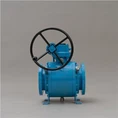



In industrial fluid control system, DIN globe valves is widely used in petrochemicals, power generation, water treatment and so on with its standardized design, high sealing performance and flow regulation capabilities. However, their long-term stable operation depends on scientific and system maintenance practices. Combining with industry experience and technical standards, this paper systematically describes the core strategy of extending the service life of DIN cut-off valve from five dimensions: installation specification, daily operation, periodic maintenance, fault management and spare parts management.
I. Preventive Maintenance During Installation
1.Control of Medium Flow Direction and Installation Orientation
DIN globe valves must strictly adhere the principle of ``low entry and high entry '', with media entering the chamber from below the disc. The design utilizes dielectric pressure to assist the valve opening, reducing operating torque while ensuring uniform pressure on the sealing surface when closed. Reverse installation can result in seal failure, valve stem bending, or even valve body cracking. For example, in a steam pipelines, a reverse installation may cause valve stem to become stuck due to differential thermal expansions, necessitating double verification through arrow markings and flowcharts to ensure correct orientation.
2.Pipeline Cleaning and Pre-treatment
Clean pipe thoroughly before installation to remove solder slag, rust and other particles. For large diameter valves (DN200 and above), high pressure blow-dry or borescope inspection is recommended to prevent impurities from becoming embedded in the sealing surface. In one chemical plant, a faulty pipe caused a scratch on the sealing surface of newly installed valve when it first opened and closed, leaking more than 300% of the standard and eventually requiring factory repair.
3.Connection Methods and Torque Control
For flange connections, use flange gaskets in accordance with DIN 2543 and control bolt fastening torque according to DN size (e.g. DN50 valves 180-220 N · m). For threaded connections, anti-seizing compound shall be used to prevent thread from sticking under high temperature conditions. When welded together, the root passes is welded by TIG welding, and the interpass temperature is controlled below 200 ℃ to prevent valve body deformation.
ii. Daily Operation Specifications
1. Operating Torque Management
Manual operation torque should be 80% – 120% of the design value. If you notice a sudden increase in force, stop immediately and check:
Over-tightening filler: Adjust filling cover by rotating 1/4 turn at a time using ``diagonally tightening gradually ''.
Bend valve stem: Measure valve stem straightness with dial indicator; replace if deviation exceeds 0.05 mm/m.
Medium crystallization: Installation of a steam tracker on the valve cavity for easily coking media (e.g., asphalt, heavy oil).
Electric actuators shall be equipped with a torque protection threshold that automatically stops when actual torque exceeds 15% of the rated value. Refineries have experienced valve stem fractures due to unplanned shutoffs due to the lack of torque protection during crude oil distillation unit operation.
2. Partial Opening Control
The cut-off valve shall not be partially opened for a long period of time (<30% open) because high speed media will corrode the sealing surface. For flow regulation requirements, it is advisable to use an angle globe valves or a special control valves. A thermal power plant used a a DN150 globe valve to regulate flow of water into the water supply, causing a 2mm seal surface to wear and leak from 0.5L/min to 5L/min in three months.
3. Thermal shock protection
For high temperature media (>300°C), bypass valves are first opened to balance pressure differentials and then gradually heated at ≤50°C/h at cold start. Sudden introduction of a high temperature medium will result in a concentration of stress at the body-cover connection, leading to cracks. The ammonia plant has been hit by fires caused by bolt fracture and hydrogen leakage when valves are quickly opened in high temperatures.
III. Periodic Maintenance Plan
1. Seal surface maintenance
Frequency of inspection: visual inspection every six months and dye permeability test once a year.
Repair technique: Small scratches (<0.1 mm deep) can be polished with 800 particles of 800-grit aluminum oxide sandpaper; deeper scratches require laser repair with coated hardness ≥HRC45.
Material upgrade: For corrosive media (e.g. seawater, chloride solutions), upgrade regular stainless steel seats to Hastelloy C-276 for a tenfold increase in corrosion resistance.
2. Valve Stem Lubrication Management
Lubricant selection:
Low temperature application (<-20°C): Molybdenum disulfide grease
High-temperature applications (>200°C): Graphite powder mixed with lithium grease
Food grade medium: H1-certified lubricating oil
Oil quantity control: Calculate grease volume according to valve stem diameter (Formula: Q = 0.005 × D2, of which D is valve stem diameter mm) to avoid excessiveinjection leading to gland leakage.
3. Actuator Maintenance
Electric actuators: Check the sensitivity of the limit switch quarterly and replace gearbox lubricating oil annually (ISO VG320 gear oil is recommended).
Pneumatic actuators: drains moisture from the filter once a month, inspects cylinder seals every six months and replaces them if leakage exceeds 0.5 L/min.
Hydraulic actuators: Replace hydraulic fluid every two years and monitor hydraulic pump pressure fluctuations (≤ 5%).
IV. INTRODUCTION Fault Diagnosis and Handling
1. External Leakage Handling
Stem Leakage: Adjust packing using the "three-stage tightening" method:
Tighten until leakage stops.
Re-tighten 1/4 circle after 24 hours.
Re-tighten 1/8 turn after 72 hours.
Flange leakage: For valves ≤DN100, bolt fastening 10% – 15%; for valves larger thanDN100, decompression is performed prior to replacement of gaskets (metal spiral-wound gaskets recommended).
2. Internal Leakage Handling
Acoustic emission detection: use ultrasonic detectors detectors Locate leakage points; if sound intensity exceeds 80dB, it needs to be removed.
Pressure testing: 1.1 × design pressure shall be applied to closed valve and maintain for 10 minutes; pressure drop shall ≤ 0.5%.
Cover repair: Plasma spray technique was used to repair the cover, with a coating thickness of 0.3–0.5 mm.
3. Sticker processing
Mechanical bonding: When injecting kerosene for osmosis, jacks are used to slowly pry the disc open.
Thermal expansion bonding: For high temperature valves, heat the cover to medium temperature before operation.
Crystallization sticking: An electrical tracking device is installed on the valve cavity for easily crystallized media to maintain the temperature above crystallization points.
V. Spare parts management and Lifespan Extension
1. Critical Spare Parts Inventory
Establishment of level III spare parts warehouse:
Consumables ≥ 3 sets of inventory (seals, packaging, O-rings).
Functional components ≥ 2 ≥ 2 sets (disc, seat, stem).
Class 3: Strategic components (valve bodies, cover) with inventory ≥ 1.
2. Spare Parts Lifespan Management
Sealed components: Implementation of thefirst-in, first-out principle; rubber components shall not be stored for more than2 years.
Metal components: Regularly test hardness (HB ≥ 180); reheat if below standard.
Electronics: Store actuator circuit boards at ≤60% humidity to prevent electrostatic damage.
3. Full Lifecycle Management
Keep valve records to record:
Installation date, medium parameters and operating frequency.
Maintenance history (including lubrication dates, part replacements and inspection data).
Troubleshooting history and solutions.
The service life of the remaining valves can be predicted by large data analysis. For example, a petrochemical enterprise modelled five years of operation data for 1,000 valves and discovered a linear relationship between stem wear and opening/closing cycles (R2 = 0.92). This allows for different maintenance strategies, increasing average maintenance intervals from 12 months to 18 months.
Conclusion:
The long-term operation of DIN globe is the result of a combination of standardized installation, precision operation, preventive maintenance and intelligent management. By implementing the maintenance practices described in this article, a power group's thermal power plant extended the average life of cut-off valves from 8 to 12 years, reducing maintenance costs by 35% and unplanned outages by 60%. In the future, as IoT technology merges deeply with predictive maintenance, valve maintenance will move toward "zero fault," providing more robust support for efficient industrial fluid system operations.
What Maintenance Practices Ensure Longevity of DIN Globe Valves?
May 15, 2026 Leave a message
Previous
No InformationSend Inquiry